Tuesday, December 7, 2010

Reagenz - Playtime


I happened upon this album while browsing for some deep house, the most recent sub-genre that I've immersed myself in. What struck me was the exactness of the sound, more akin to microhouse than the bass heavy drifters that deep house producers usually produce. The deep is definitely here though, as heard in the first track, which floored me in a way that no other techno has in a while, since probably Kris Wadsworth. The groove is just incredible, laid back, perfect headphone music, and driving to this is insanity. The rest of the album holds up, gradually getting more and more low-key until the 24-minute closer, a great ambient track in its own right, and a great counterpoint to the beat-oriented tracks, showing the wide range of this distinctly original sound.

Highly, highly recommended, and worth the download for the first track alone.

http://www.mediafire.com/?r1lzf705uu11m0w

Thursday, November 18, 2010

Zs - Arms / Extra Life - Secular Works


What follows is an awkward essay comparing modern composition to techno:

Few modern groups can be compared to Zs. Even those comparisons would have descriptions like "as experimental as" or "striving for", because nothing really sounds like Zs. Zs don't even sound like Zs, from piece to piece (because that's what they are). What connects these 7 tracks is a constant drive to stretch, subvert, or destroy any and all characteristics of rock music from the inside. Side-stepping prog-rock's charred corpse, they work on the model of modern and contemporary composed music to create a sound spartan in structure, relentless, equally abrasive and hypnotic, and astoundingly complex. Working with what is essentially a chamber group, the members use rhythm more than color in novel ways to ensure that the compositions never lose their edge.
So doesn't that sound like techno? No really, just go with it for a sec. Anyone that follows this blog knows my fascination with minimal techno, and mainly because of its, well, sparse atmosphere and repetitive, complex rhythms. So what if Zs don't have a four on the floor? What if there's no synths? What if this whole review doesn't make sense? Check it out.


And how about applying that modern view on monophonic chant?
Yeah, why not.

This is Charlie Looker, ex-Zs but guitarist on Arms, with slightly less challenging music. And by that, I don't mean not challenging.


Arms: http://www.mediafire.com/?oie9brmgrvc
Secular Works: http://www.mediafire.com/?dl55we9a036hsqa

Wednesday, October 27, 2010

Carlo Mombelli & The Prisoners of Strange - I Stared into My Head

Upped by request

I only listened to this by recommendation from someone else, but I have to say I was pleasantly surprised. It's not in the style of what I usually post, but I figure most of what I post is fairly open-minded, so don't let that keep you from listening to it.
I guess the cover is a nice place to start: Weird dream-like African Dada kind of sums up the music. In the broadest sense this would be jazz, but each band member's talent allows this to have the creativity of a RIO album without any of the bullshit that usually covers that territory. The band's willingness to introduce electronics is checked by their musicianship; it all feels organic in the most original kind of way. For example, the first track has Coltrane-like sax wailing over African rhythms, later there's traces of Webern's strings, and it's not clear who or what is making these sounds. In any case, some great new jazz that's passed most people by due to its humble South African origins, so check it out.

http://www.mediafire.com/?lrjy8v662q96z74

Sunday, October 3, 2010

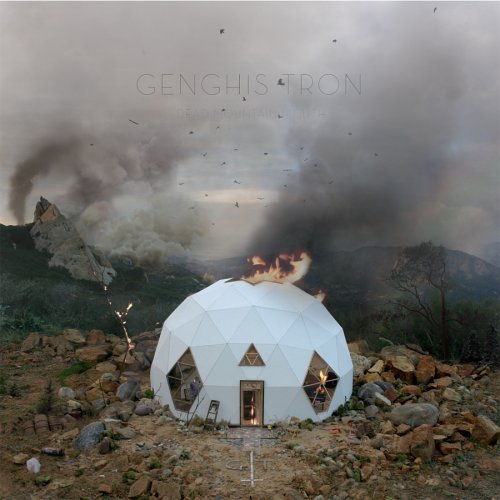
Genghis Tron - Dead Mountain Mouth


I don't wanna describe this as cybergrind because the genre generally sucks, so let's just called this really aggressive electronic post-hardcore inspired by Eliot's The Waste Land.

Upped by request.

http://www.mediafire.com/?y5el180u170x1kz

Saturday, October 2, 2010

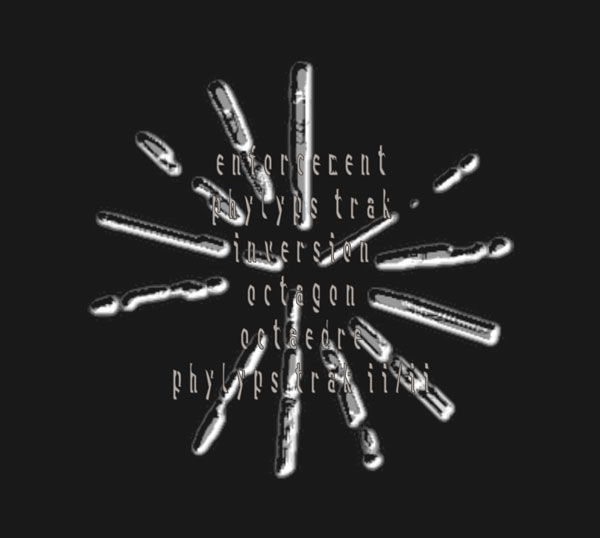
Basic Channel - BCD-2


Brain exercise: What does the phrase "German Techno" bring to mind? Sparse? Well, spartan is a better word. Harsh? For extended periods, sure. Emotional? Yes, and only so. The techno scene in Berlin that developed in the early 90s was known for its stripped down aesthetic, showing an aggressive side to our emotions rarely expressed in pop music. Disco, the form out of which techno evolved, was for the most part dance music, but Berliners Mark Ernestus and Moritz von Oswald saw through this. Avoiding the funky rhythms of Detroit Techno, they started Basic Channel, both a moniker and a record label that put out a string of records that portray the darker feelings of an urban night. Loneliness and anger were prominent in their early work, but this compilation highlights their later masterpieces, when they turned completely away from any semblance of a melodic line to focus on visceral energy.
They weave bare strands together to form incredible texture; the opening synths of 'Enforcement' form a chord progression that unrelentingly repeats throughout the track (It's thirteen minutes), only to be further squared off by the percussion. New layers enter, and a counterpoint develops made only of repeating figures, all so dry on their own. And yet it's all so human. It has the foreboding of what I imagine to be Berlin at 2 a.m., and is anything but dance music. It is repeating to the point of nausea, but not boredom.
It is the sound of unrest, discontentedness, and the inability to change. Polyrhythmic and robotic, it must be listened to as conceptual music, willfully limited to one palette. BCD-2 captures the state of a nation by focusing acutely on highly personal emotions; it is lonesome and cold.
Despite this, the album has become hugely influential. For one, microhouse such as Bruno Pronsato or Villalobos is largely dependent on Basic Channel's economy of sound. Everything after that resembles it seems to be a way of taking its core and making it more accessible. Its soul, however, comes from its uncompromising nature, and for this reason any album I listen to after this seems too hurried, too varied. In six songs averaging thirteen minutes each, the German duo makes us feel what they feel, ironically through such an unwelcoming medium.
Get lost in this one night and go for a walk. Let it sink in, you might hear silence a different way.


http://www.mediafire.com/?hpia67fhqx577ya

Saturday, August 28, 2010

Bruno Pronsato - Why Can't We Be Like Us

Upped for CG Pinesworthy and BryFly

Back in the techno vein, I have a fantastic microhouse release from '08. Although it seems to have been looked over by the masses, I suspect the aesthetic has something to do with this; microhouse as a genre can certainly be described by the word "reserved", a descriptor which doesn't bring strong emotional reactions. And it's true, Pronsato's music plods along sparingly, and cool sounds seem to be wasted by appearing only once before another one comes in to push them out. But perhaps the appeal is strangely part of this. Minimal techno is armchair music, and following the trail Pronsato leads us on is certainly enjoyable because of how winding it is, and how much attention is required to notice that it's a trail at all.
There is an inevitable connection to Ricardo Villalobos, someone whom I am not alone in considering the godsend of microhouse, and techno in general. The interesting thing, however, is that this album to me sounds like Villalobo's Thé au Harem d'Archimède, probably one of his weaker efforts. If Bruno Pronsato made an album like Fizheuer Zieheuer, it would most likely fail, because Villalobos is better at slow, monolithic works, while Pronsato can keep things fresh with quick changes.
I wish this whole Villalobos meandering wasn't necessary, but most of the negative criticism I've seen towards this album has been that it's derivative. I would strongly counter this, because in such a stripped down genre, Pronsato is doing a surprising number of innovative things, and certainly owes more to other producers than Villalobos.

PS Perfect driving music

http://www.mediafire.com/?0h6gd8p09cgvf5v

Tuesday, August 17, 2010

Charles Mingus - The Black Saint and the Sinner Lady


This one is up by request, but I am glad someone asked me for it, because although I haven't posted too much of his work on here, I am a huge admirer of Charles Mingus. While enormously respectable as a composer, his work truly shines when one listens to his work specifically as jazz and realizes how far Mingus stretched the idiom. While jazz composition frequently is nothing more than a melody which establishes the framework in which the players improvise, Mingus found ways in which his own vision coexists with the musicians' creation. In his own words, "Each man's own particular style is taken into consideration, both in ensemble and in solos". This leads to an extraordinary connection between all players of the ensemble, one that is hard to find except in smaller, usually bebop and post-bop groups. It also opens up possibilities for "collective improvisation", a phrase Mingus used to describe his work. The important thing about this process is that it is very flexible, and hugely responsive. Mingus' big bands are only marginally connected to, say, Ellington's, because there is always a feeling of suspense from the framework being stretched by the current improvisers.
This is perfectly exemplified by The Black Saint and the Sinner Lady, possibly Mingus' crowning achievement in large-scale composition. The motifs return and intermingle like characters, an effect Mingus deliberately worked in, judging by the titles of the movements, yet each phrase is expanded upon by jazz musicians in top form. Thus, the melody is used as a springboard (the fundamental principle of jazz), and Mingus' arrangements form the chordal structure, as well as an undeniably cool atmosphere. Though highly experimental, Mingus' work is just as listenable, and truly must be heard.

LINK REMOVED BY REQUEST